Every automation, every field it touches, and what breaks if you add one more.
HubSpot shows you a property's value and a workflow's enrollments. It cannot show you which twelve things write that property, or what a stage change sets off.
A portal's automation graph, drawn from its definitions: four systems, every workflow, form, job and zap as a body, every field they touch as a bond. This one is invented so we can show it. Drag to turn it. Yours takes two minutes.
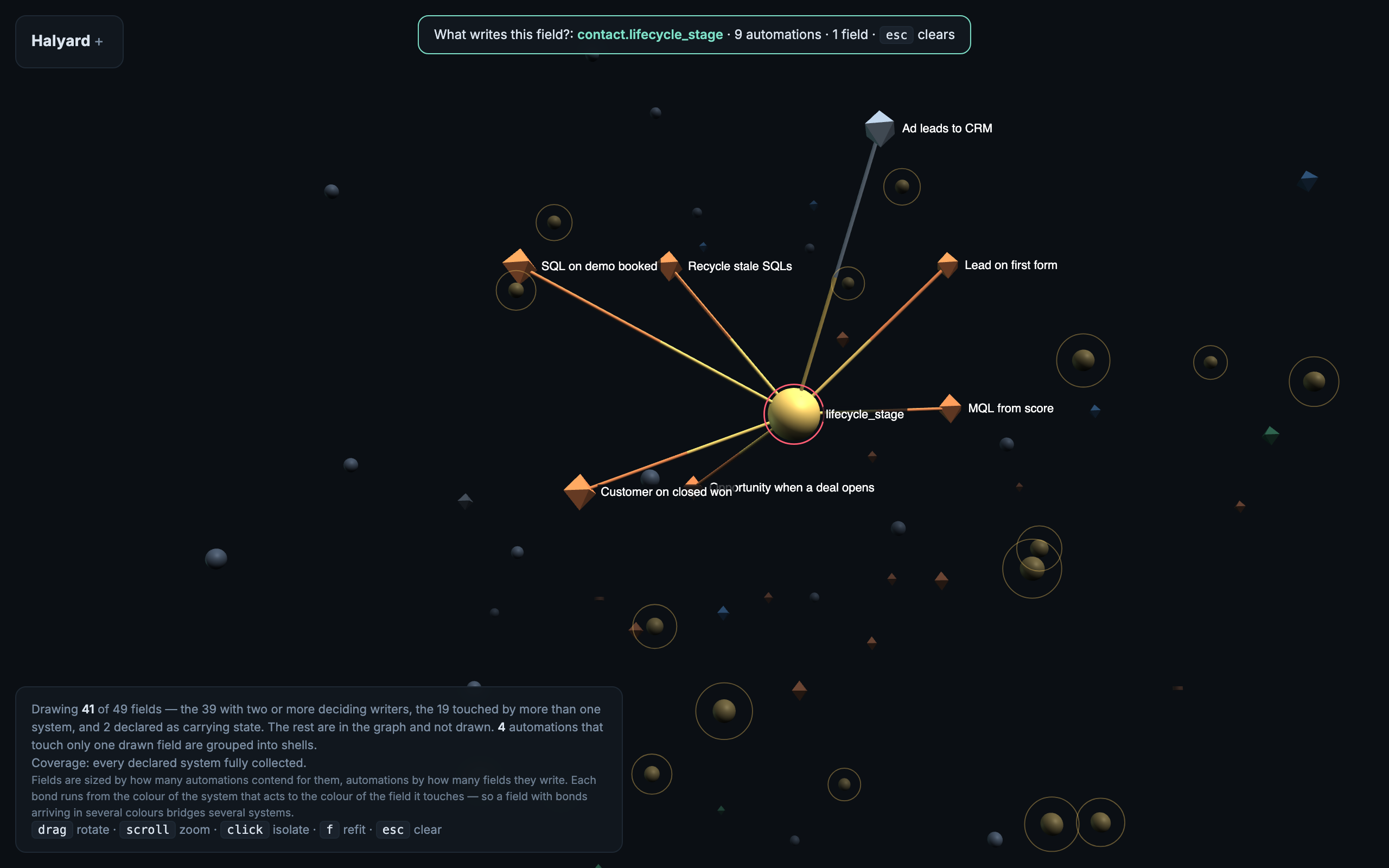
What writes this field?
One field lit with everything that sets it, across systems: forms, workflows, a zap. Each bond runs from the colour of the system that acts, so a field written from several colours is a field several teams believe they own.
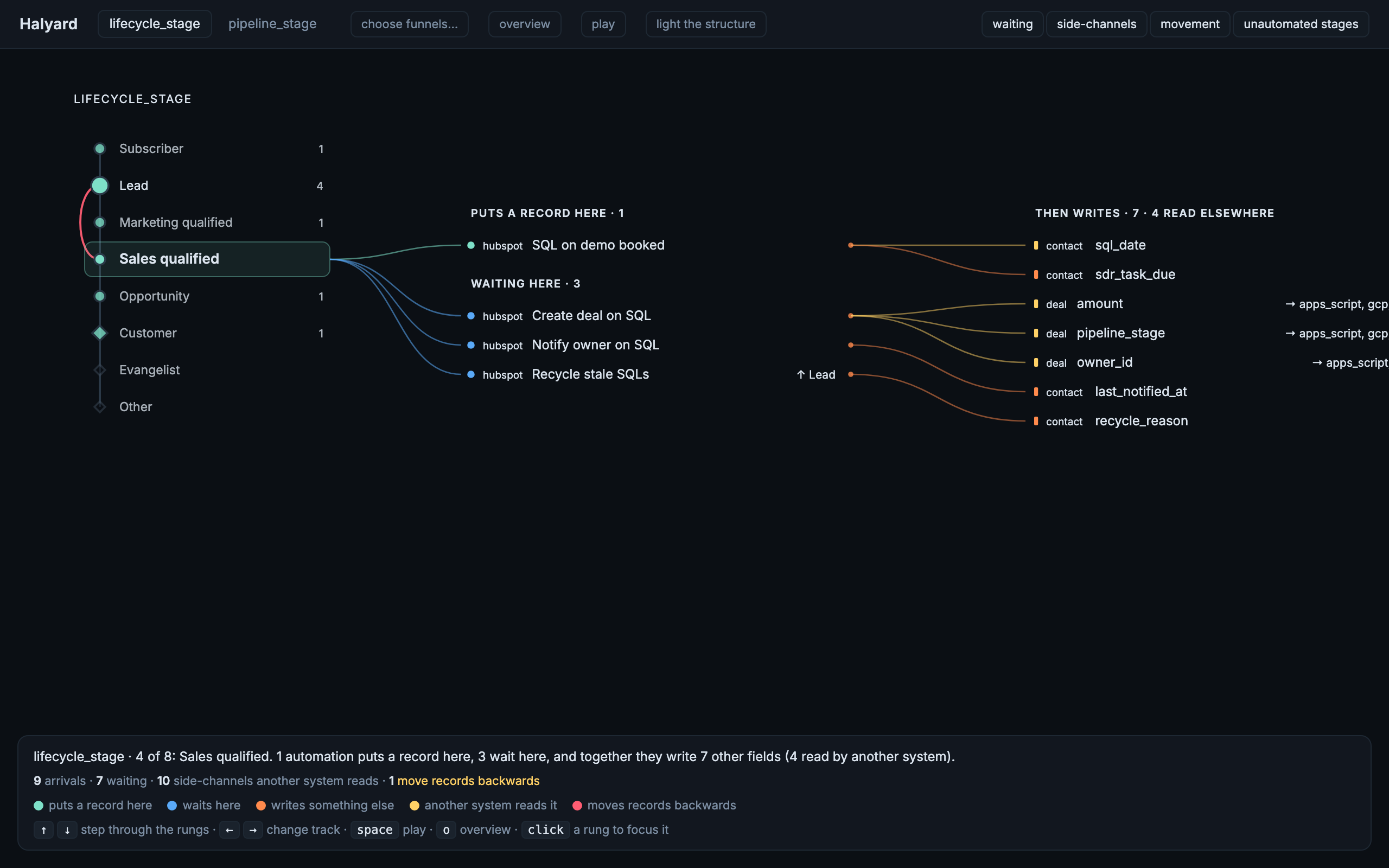
What does this stage set off?
The funnel as a track. Step onto one stage and see who puts a record there, who is waiting, what those automations write next, which of it another system reads, and which one moves records backwards.
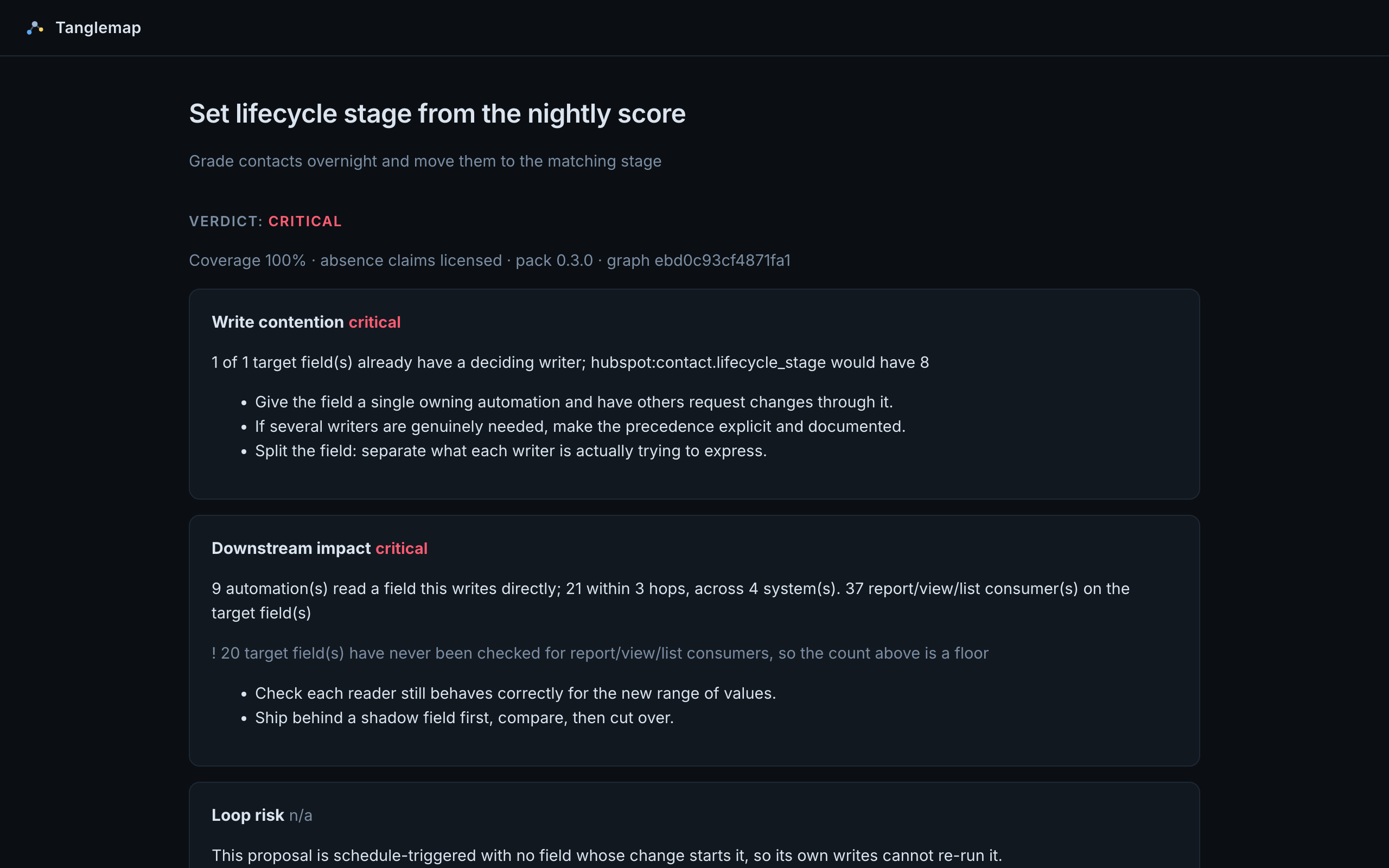
What breaks if I add one more?
Describe the automation you are about to build. Six checks run over the graph and come back with counts, not opinions: how many writers the field would have, how many reports sit behind it, and whether the change can re-trigger itself.
How it connects
Hosted, or on your own
machine with tanglemap serve. Either way the app is the same.
Read-only scopes, listed on the connect card. The first collect runs while you watch the log.
The structure, the trajectory, the roster, and an assistant that can ask them questions over MCP.
Reads workflow, form, list and property definitions. Never contact, company or deal records.
Trust, briefly
The collector reads what your automations are: their triggers, criteria and the fields they touch. It never reads a contact.
Row-level security in the database. A workspace's graph is readable by its members and by nobody else, including us at the API.
Keep every token on your own machine and send us only the graph, or run the whole thing locally and send us nothing.
The security page says all of this in full.